
Pertubuhan Sains & Kesejahteraan
Science & Wellness Organisation
(PPM-013-05-16022012)
Special Consultative Status with the United Nations Economic and Social Council


Monitoring Global Air Quality for a Cleaner and Healthier World
Global PM2.5 levels on 18 October 2025, 11:00 AM (UTC+8), reveal the current state of air pollution worldwide. SWO has been monitoring air quality across the globe for many years, providing evidence-based insights to protect public health and drive action for cleaner air.
Every Breath Matters. Every Life Counts.

Image source: Unsplash - Photo by Ella Ivanescu
Air pollution is a global public health emergency. According to the World Health Organization, air pollution contributes to more than 7 million premature deaths every year, making it one of the leading environmental risks to human health worldwide. From dense urban centres to remote rural communities, no population is fully protected from its harmful effects.
Long-term exposure to polluted air damages the lungs, heart, and vital organs, increasing the risk of respiratory diseases, cardiovascular conditions, pneumonia, and other life-threatening illnesses. Despite growing scientific evidence and international guidelines, billions of people continue to breathe air that exceeds safe health limits.
For years, SWO has been actively monitoring air quality across regions, tracking critical pollutants including particulate matter (PM), carbon monoxide (CO), sulfur dioxide (SO₂), and nitrogen dioxide (NO₂). Through continuous observation and data-driven analysis, SWO provides evidence-based insights into air quality trends and their implications for public health. Yet global pollution levels remain persistently high, underscoring the urgent need for stronger awareness, prevention, and collective action.
SWO’s Clean Air Campaign is a global initiative dedicated to protecting public health, strengthening public understanding of air pollution risks, supporting disease prevention, and driving meaningful action toward cleaner, healthier air for present and future generations.
What is Air Pollution?
What is Air Pollution?
The World Health Organization (WHO) defines air pollution as the contamination of indoor or outdoor air by chemical, physical, or biological agents that modify the natural characteristics of the atmosphere.
Air pollution is broadly categorised into:
-
Ambient (outdoor) air pollution: Primarily originating from transport, industry, power generation, waste burning, and construction activities

Image source: Unsplash - Photo by Maxim Tolchinskiy
-
Household (indoor) air pollution: Mainly caused by the use of polluting fuels and technologies for cooking, heating, and lighting

Image source: Unsplash - Photo by Sergio
Key air pollutants identified by WHO include:
-
Particulate Matter (PM2.5 and PM10)
-
Nitrogen Dioxide (NO₂)
-
Sulfur Dioxide (SO₂)
-
Carbon Monoxide (CO)
-
Ground-level Ozone (O₃)
Among these, fine particulate matter (PM2.5) poses the greatest health risk due to its ability to penetrate deep into the lungs and enter the bloodstream.

A Global Threat to Health
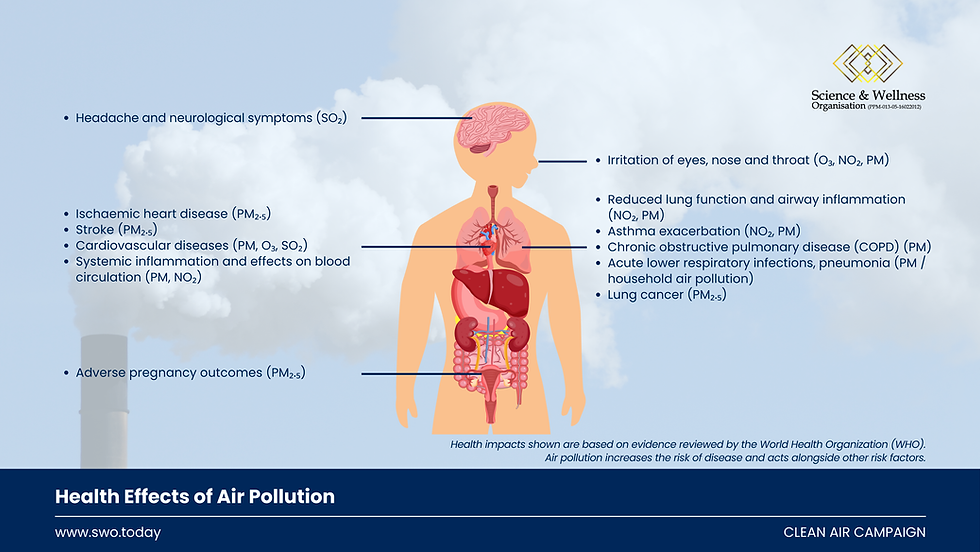
Air pollution affects every continent, impacting children, adults, and vulnerable communities the most. It is linked to respiratory diseases, cardiovascular and lung conditions, neurological effects, and an increased risk of pneumonia and chronic illness.
.png)
.png)
Health impacts shown are based on evidence reviewed by the World Health Organization (WHO). Air pollution increases the risk of disease and acts alongside other risk factors.
Below are publications and evidence from the World Health Organization (WHO) related to air pollution and health. These resources provide WHO’s official assessments, data, and guidance on air quality and its impacts on public health.
Emerging Evidence on Air Pollution and Health
Emerging evidence indicates that long-term exposure to air pollution is linked to additional health risks, including type 2 diabetes, dementia and autism spectrum disorder. Recent findings from the World Health Organization Health risks of air pollution in Europe: HRAPIE-2 project reinforce that air pollution contributes to a wide range of long-term health impacts across multiple organ systems, extending well beyond respiratory and cardiovascular disease.
Is the Air You Breathe Making You Sick?
Air pollution can cause or worsen:

Cough

Difficulty breathing

Chest pain

Dizziness or confusion

Asthma attacks

Fatigue
Air Pollution & Pneumonia:
A Global Health Crisis
Pneumonia remains one of the most serious respiratory infections worldwide, affecting people of all ages and placing a heavy burden on health systems and communities. Air pollution is a major contributing risk factor, weakening lung defences and increasing susceptibility to severe infection, complications, and premature death.
Evidence reviewed by the World Health Organization and the United Nations Children's Fund (UNICEF) highlights the critical role of both ambient (outdoor) and household (indoor) air pollution in driving pneumonia risk globally.
Air Pollution and Pneumonia
Air pollution silently increases the risk of pneumonia and lung cancer, placing children, older adults, and vulnerable communities at greatest danger. This is not speculation, it is supported by evidence reviewed by the World Health Organization (WHO), the United Nations (UN), and the United Nations Children's Fund (UNICEF).


Air Pollution and Brain Health
While the effects of air pollution on the lungs and heart are well established, emerging research suggests that long-term exposure may also affect the brain and nervous system.
Growing evidence indicates potential associations with:
-
Cognitive fatigue
-
Reduced concentration
-
Confusion, particularly among older adults and high-risk groups
-
Mental health (including anxiety and depression)
Research in this area is ongoing, and findings continue to evolve. These potential effects highlight the broader systemic impacts of air pollution beyond respiratory health.
COVID-19 and Air Quality: A Global Overview
Communities exposed to high levels of air pollution face greater health risks, particularly children, older adults, and individuals with pre-existing conditions. Improving air quality is a critical step in protecting public health, reducing disease severity, and strengthening community resilience against infectious disease outbreaks, including COVID-19 and future public health threats.

The Reality Today:
Billions Still Breathing Unsafe Air
Burden of Disease
6.7 million
deaths worldwide in 2019 linked to ambient and household air pollution
Household Air Pollution
2.1 billion
people still rely on polluting fuels and technologies for cooking in 2023
Ambient Air Pollution
99%
of the global population lives in places where air pollution exceeds WHO guideline limits
Source: World Health Organization (WHO)

Source: World Health Organization (WHO)
WHO’s global air quality monitoring data reveals that approximately 99% of the world’s population breathes air that exceeds WHO guideline limits, with the highest exposure levels occurring in low and middle-income countries.
Rapid urbanisation, increased energy demand, traffic emissions, industrial activity, and reliance on polluting fuels continue to drive unsafe air quality levels, creating an ongoing global health burden.

Global Air Quality Monitoring
A real-time global overview of PM2.5 pollution on 18 October 2025 at 11:00 AM (UTC+8), highlighting exposure levels that directly influence public health and disease risk.

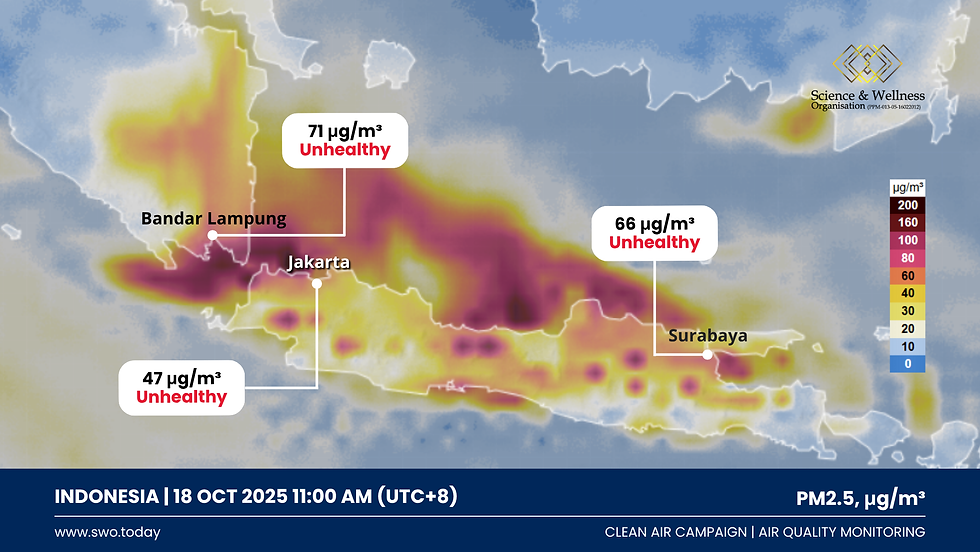
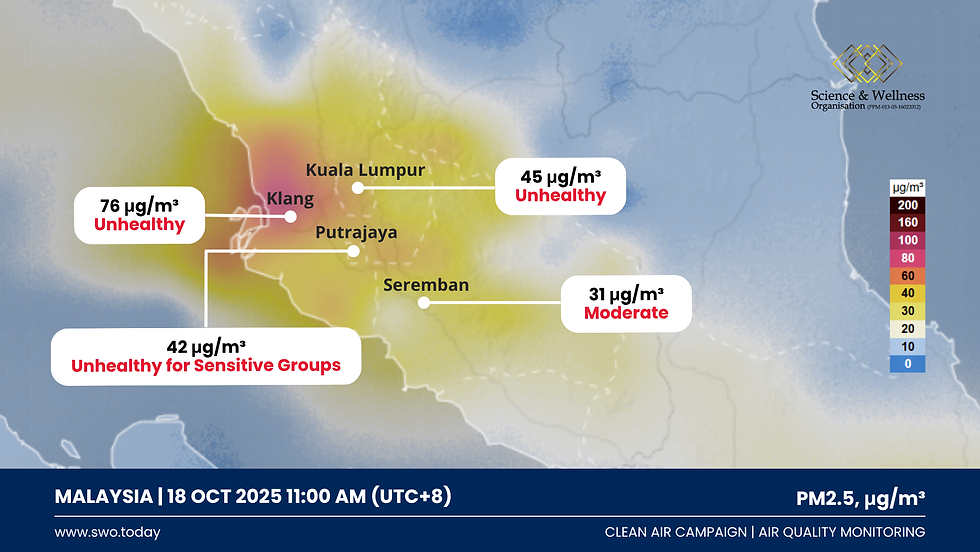
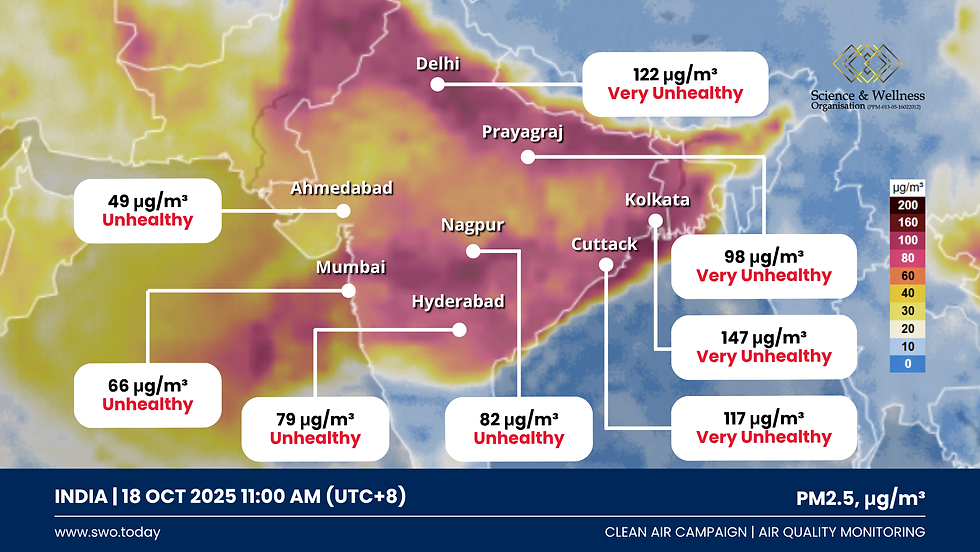
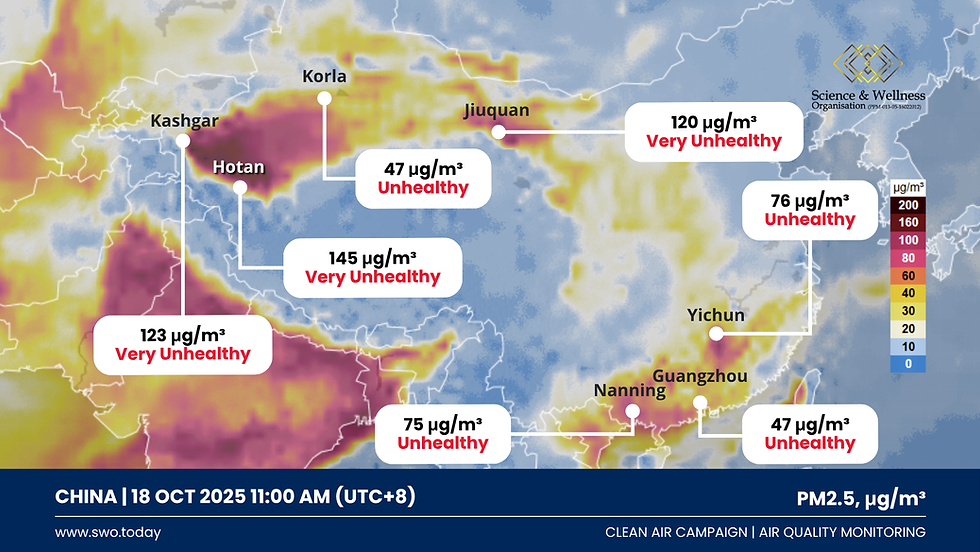
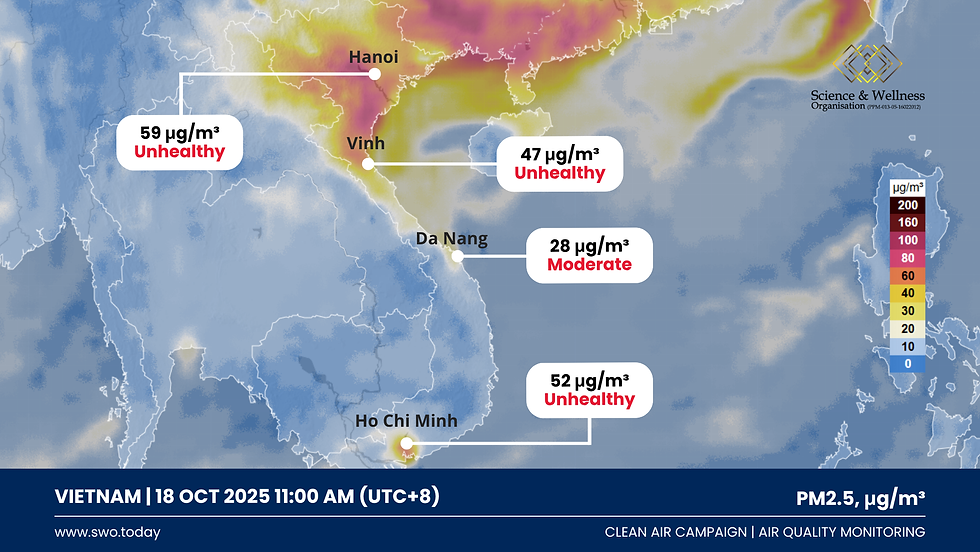
Source: Ventusky (Data: Copernicus Atmosphere Monitoring Service / ECMWF / ESA)
Why Monitoring Air Quality Matters
Accurate air quality monitoring is essential for protecting public health. It allows governments, health authorities, and communities to understand pollution exposure, identify risks, and take action before harm occurs.
The World Health Organization emphasises that monitoring air pollution levels is a critical foundation for implementing health-based air quality guidelines and reducing disease burden. Reliable data supports evidence-based decision-making, early warnings, and long-term prevention strategies.
Air quality monitoring helps to:
-
Identify population exposure and health risks
-
Support prevention of respiratory, cardiovascular, and pollution-related illnesses
-
Inform public-health and environmental policy
-
Track progress against health-based air quality standards
-
Increase transparency and public awareness
What Does “Clean Air” Mean?
WHO Air Quality Guidelines
To protect public health, the World Health Organization has established Global Air Quality Guidelines based on the best available scientific evidence.
These guidelines define recommended exposure limits for major pollutants, including:
.png)


Air Quality Transparency:
Our Right to Clean Air
Transparency on air quality is not a request, it’s a global responsibility. Everyone deserves accurate, timely, and unfiltered data about the air we breathe.
Several countries, including Malaysia, are not providing full transparency on air quality data, leaving communities without the information they need to protect their health.

Source: Centre for Research on Energy and Clean Air (CREA)
Clean Air Campaign Video Series
SWO’s Clean Air Campaign Video Series presents concise, science-driven content highlighting the dangers of polluted air and the critical need for global action. From the essential role of oxygen to the rising health risks linked to pollution, each video reveals the realities many communities face every day. The series is crafted to inform, engage, and mobilize viewers toward a future with cleaner, and safer air for all.
Air Pollution in the News & Stories
Air pollution is not just a statistic, it affects real lives every day. This collection brings together relevant news, reports, and human-centred stories from around the world, highlighting how air quality shapes health outcomes, communities, and everyday life. These perspectives connect scientific evidence with lived experience and underscore the urgency of action toward cleaner air.

“Investing in clean air saves lives, combats climate change, strengthens economies, builds fairer societies, and advances the Sustainable Development Goals.”
- António Guterres, United Nations Secretary-General
Every Breath Counts:
Achieving the SDGs with the Clean Air Campaign

SWO Global Clean Air Campaign:
From Evidence to Action
The SWO Global Clean Air Campaign is an independent initiative that transforms air quality data into public-health action.
SWO monitors air pollution worldwide using satellite-supported data, AI-driven analysis, and ground-based monitoring systems. Through real-time air quality stations and a mobile application, the campaign provides transparent, accessible information to help communities reduce exposure, prevent disease, and protect lives.
Clean air is not only an environmental issue, it is a public-health priority and a shared responsibility.
Allies in Action
The Forces Fueling SWO Global Clean Air Campaign


Support Our Mission
Clean air is not a privilege, it’s a right. Your contribution helps us protect families, communities, and future generations from the silent threat of air pollution.
Every contribution supports our work in advancing research, expanding awareness campaigns, and strengthening on-ground initiatives to build a healthier world for all.
Donate securely through:


After completing your donation, please take a moment to fill out our Donor Form, it helps us keep you updated on the campaign’s progress and ensure proper acknowledgment of your support.
Thank you for being part of the change!

Corporate Engagement & ESG Collaboration
Air quality is now a core component of global Environmental, Social, and Governance (ESG) responsibility. SWO partners with organisations committed to advancing environmental integrity, public health protection, and transparent data reporting.
We collaborate with corporations that seek to:
-
Strengthen ESG performance through measurable environmental impact
-
Support global clean air initiatives backed by science
-
Enhance sustainability reporting with validated air quality insights
-
Align organisational values with community health and environmental resilience
Partner with SWO to deliver meaningful and measurable ESG outcomes.
Corporate Relations & General Inquiries:
We aim to build impactful collaborations that strengthen ESG performance and contribute to a cleaner and healthier world.
Volunteer for the Global Clean Air Campaign
Join the Global Clean Air Campaign as a volunteer and make an impact from anywhere.